
To choose woven fabric for womenswear, start with the garment’s silhouette and end use, then compare drape, weight, opacity, stability, care expectations, color, availability and sewing behavior against an approved physical reference. A fiber name alone is not a usable fabric specification. For a brand or buying team, the safest decision is a staged one: define what the garment must do, shortlist real fabric articles, test only what the market and product require, and approve the exact bulk standard before cutting.
This guide is written for B2B buyers developing woven dresses, shirts, skirts, trousers, shorts, jumpsuits, matching sets, blazers or light jackets. It explains how to turn a visual idea into a material brief that a mill, sourcing team and garment factory can interpret consistently. It does not prescribe one “best” textile, because a crisp poplin shirt and a fluid occasion dress need very different answers.
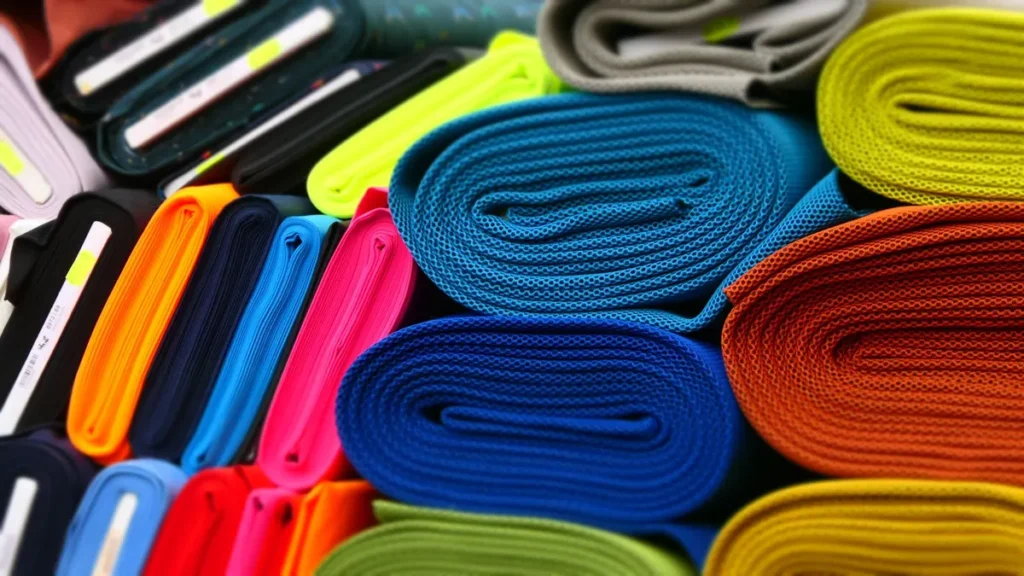
Start with garment intent, not a fabric trend
A fabric can look attractive on a swatch card and still be wrong for the intended garment. Before requesting options, describe the silhouette, body areas that need structure or movement, desired surface, season, use occasion, target market and care position. This gives the sourcing team a decision framework instead of a mood-board-only request.
Translate the silhouette into material behavior
Begin with shape. A gathered dress may need enough fluidity to fall without excessive bulk at the waist. A tailored blazer may need controlled stability and compatibility with interfacing. Wide-leg trousers need a balance of drape, opacity and recovery. A blouse with fine gathers needs a fabric that can be handled cleanly at seams and openings.
Write these requirements as observable outcomes. “Soft luxury fabric” is subjective. “Fluid drape, matte face, non-sheer in the approved color, suitable for fine gathers and the proposed seam construction” gives the team something to compare. Buyers can review Enqi’s woven womenswear product categories to identify the construction context before asking for fabric options.
Use construction families as a shortlist, not a guarantee
Poplin, twill, satin, crepe, dobby and jacquard describe different structures or surface effects, but the name does not lock in weight, fiber, finish or performance. Two fabrics sold under the same family name can behave differently because of yarn size, density, blend, finishing and dyeing. Request the supplier’s actual article data and a physical cutting rather than selecting from a generic label.
Fiber content also needs context. Cotton, viscose, lyocell, linen, polyester and blends can each support useful womenswear applications, but the percentage shown on a composition line does not reveal drape, shrinkage, seam behavior or color result. Treat composition as one input among several, not a quality score.
Build a product profile before sourcing
A concise profile should state the garment type, intended shape, target season, color direction, expected order context, target price position and any buyer-mandated performance or regulatory requirements. Add the intended lining, interfacing, closures, print or embroidery because those components can change the fabric decision.
If the style is still early, separate “must have” requirements from preferences. For example, opacity and wash-care positioning may be mandatory, while an exact weight may remain open until the first drape review. Enqi’s fabrics and trims capability page shows the material information that is useful before sampling.
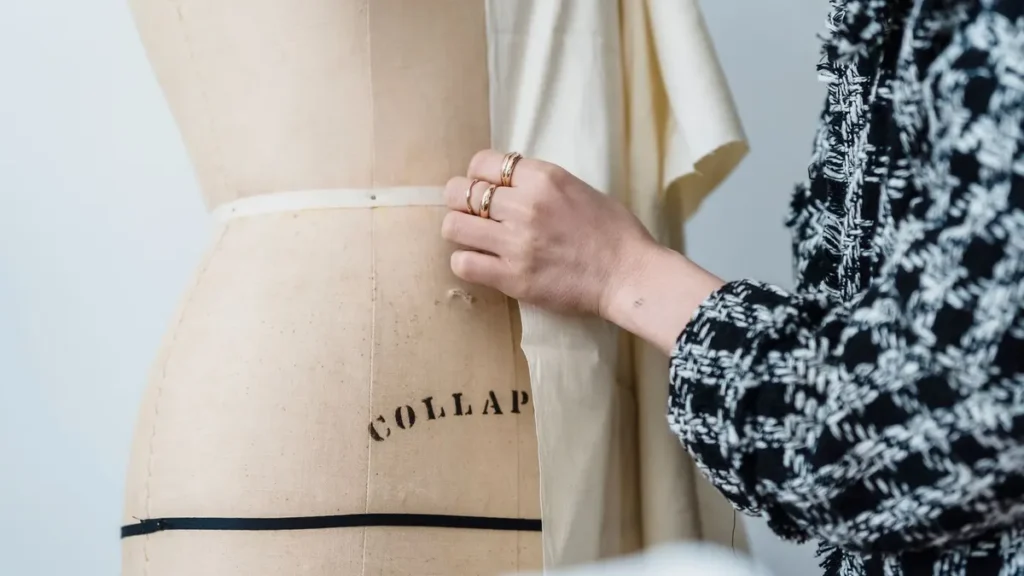
Evaluate performance with product-specific checks
Good material evaluation combines hand assessment, garment construction experience and an agreed test plan. The plan should reflect the product, destination market, care claim and buyer requirements. It should not be copied automatically from another style or presented as proof that a supplier, factory or fabric is certified.
Review drape, hand, weight and opacity together
Drape is easier to judge on a larger cutting or sample garment than on a small hanger card. Observe how the fabric falls vertically, how it gathers, whether folds collapse or stand away from the body, and whether the behavior changes over a lining. Record the approved face and back, because some constructions are visually similar.
Weight helps comparison, but it should not replace physical assessment. A number expressed in grams per square metre does not explain thickness, density, finish or surface. Opacity should be checked in the intended color and under relevant lighting. Pale colors may need a different lining or construction decision from dark colors even within the same base fabric.
Check recovery and sewing compatibility
Handle the fabric in ways that reflect the style: fold it at a hem, gather it, press a small area using an appropriate method, and sew trial seams if the design is demanding. Watch for puckering, distortion, fraying, needle marking, seam impression or excessive shine. A loose or slippery construction may require a different seam, allowance, needle, stabilizing step or design adjustment.
For woven fabrics, seam opening or yarn slippage can matter at fitted areas and stressed seams. ISO 13936-2 describes a fixed-load method for assessing resistance to yarn slippage at a sewn seam. It is a test-method reference, not a default pass level and not a certification claim. A buyer should define whether the method is relevant, which laboratory will perform it, the acceptance criteria and the tested color or lot.
Match care and color checks to the intended claim
Care expectations affect both fabric selection and garment labeling. If a product is intended for washing, dimensional change and color behavior may need to be evaluated under agreed conditions before bulk approval. ISO 5077 covers determination of dimensional change after specified washing and drying procedures, while ISO 105-C06 covers methods for assessing color fastness to domestic or commercial laundering.
Those references do not establish the correct procedure or acceptance level for every garment. The brand remains responsible for its destination-market requirements and claims. Confirm the wash procedure, detergent system, drying method, number of cycles, result format and acceptance criteria in writing. Where formal results are required, use an appropriately qualified independent laboratory and retain the report with the style record.
Approve fabric through development stages
A fabric choice becomes reliable through progressively more representative evidence. Approving a digital photo, a color name or an untracked cutting is not enough. Each stage should answer a defined question and connect to the next approval.
| Gate | Buyer decision | Record to retain |
|---|---|---|
| Initial cutting | Is the construction, hand, drape and price position worth developing? | Supplier, article code, composition, usable width, weight, finish and date |
| Color or print submission | Does the submitted color or artwork match the approved direction under agreed lighting? | Approval status, version, color reference and dated comments |
| Prototype or fit sample | Does the fabric create the intended silhouette and work with the proposed construction? | Sample version, fabric article and consolidated fit or workmanship comments |
| Pre-production reference | Are material, color, trims, workmanship and care decisions aligned for bulk? | Approved sample, specification, test status and signed or digitally controlled approval |
| Bulk material | Does delivered fabric correspond to the approved standard and order requirements? | Lot information, incoming review record and disposition of any variance |
Identify every submission
Every swatch, lab dip, strike-off or sample should carry enough information to trace it: style, supplier, article, color, date and version. Approval language should be unambiguous. “Looks okay” in a message thread is difficult to manage later; “Color submission B approved for style X, subject to the recorded bulk tolerance” is clearer.
Keep comments consolidated. If color is approved but drape is not, record the split decision. If the article changes after costing, start a new review rather than assuming it is equivalent. Enqi’s product development process is designed to turn references into a shared specification before the first sample.
Judge the fabric on the garment
The sample reveals interactions a flat swatch cannot: neckline stability, seam appearance, zipper behavior, gathering bulk, pressing response, lining show-through and movement on the body. Review fit and fabric together, but keep their comments distinct. A pattern alteration may solve one issue; a fabric change may solve another.
When the fabric changes, repeat the development checks affected by that change. Moving from a stable plain weave to a soft, loose construction can alter measurements, seam behavior and production handling even if the silhouette is unchanged. The pattern, sampling and fit workflow explains how revisions can be tied to a controlled sample version.
Confirm bulk continuity before cutting
Ask how the bulk fabric will be identified and whether production may involve multiple dye or production lots. Define how shade, width, defects and usable quantity will be reviewed. When a variance appears, the practical question is not only whether it is visible on a roll; it is whether it can affect panel matching, garment appearance, yield or the shipment plan.
Do not approve cutting solely because a delivery date is approaching. Resolve material discrepancies through a documented disposition: accept for a defined use, replace, reprocess, segregate or adjust the plan with buyer approval. The decision should be traceable to the responsible people and the affected quantity.

Write a production-ready fabric brief
The final brief should make the approved article identifiable and the decision process repeatable. It is not necessary to fill it with generic jargon. It is necessary to remove the assumptions that could change garment appearance, cost, construction or timing.
Record the commercial and technical essentials
- Identity: supplier, mill if known, article code, fiber composition, construction or trade name, finish, face and back.
- Physical data: agreed weight, usable width, stretch direction if relevant, color or print reference, and approved hand standard.
- Garment context: style, lining, interfacing, closures, wash or care position, and sensitive operations such as gathering, fusing or embroidery.
- Approval evidence: approved cutting or garment, dated color approval, sample version, test plan and result status where required.
- Commercial context: target quantity, color split, sourcing availability, material minimums, expected replenishment needs and required delivery window.
- Change control: who can approve substitutions, how a new lot or article is submitted, and which records supersede earlier versions.
Availability matters as much as the first swatch. Ask whether the article is stock-supported, made to order or seasonally limited; whether color minimums apply; and what happens if the development sample uses available yardage but bulk needs a new run. These answers influence quotation, sampling and planning, so they should be raised before the order is urgent.
Watch for material-selection red flags
Pause when an offer lacks an article code, composition is described only verbally, the sample yardage cannot be connected to a bulk source, or a “same quality” replacement arrives without comparative data. Other warning signs include approvals scattered across several channels, no record of the intended fabric face, and a care claim chosen before relevant evaluation.
Also question false precision. A weight or composition figure does not prove the fabric is suitable, and a test name does not prove a result. Request the actual submission, method, conditions, acceptance criteria and report where the requirement matters. Avoid describing a product as certified unless a valid, in-scope certificate actually supports that exact claim.
Send enough information for a useful factory review
For an initial review, send the Tech Pack or reference, garment category, intended silhouette, preferred composition or approved article if one exists, target colors, quantity context, destination market, care expectation and delivery objective. State what is fixed and where alternatives are acceptable. If you have a physical benchmark, describe what must be matched and arrange a traceable sample handover.
A factory can then assess material sourcing, construction compatibility, sample purpose and missing decisions together. That produces a more useful conversation than asking for “the best fabric” without a product context.
Preparing a woven womenswear style? Share the garment reference, material direction, quantity and timing so the team can identify the next useful approval step.