
Woven womenswear category
Custom Women’s Woven Jumpsuit Development
Develop woven jumpsuits and utility one-pieces with torso length, waist position, rise, entry opening and upper-to-lower fit evaluated as one connected garment.
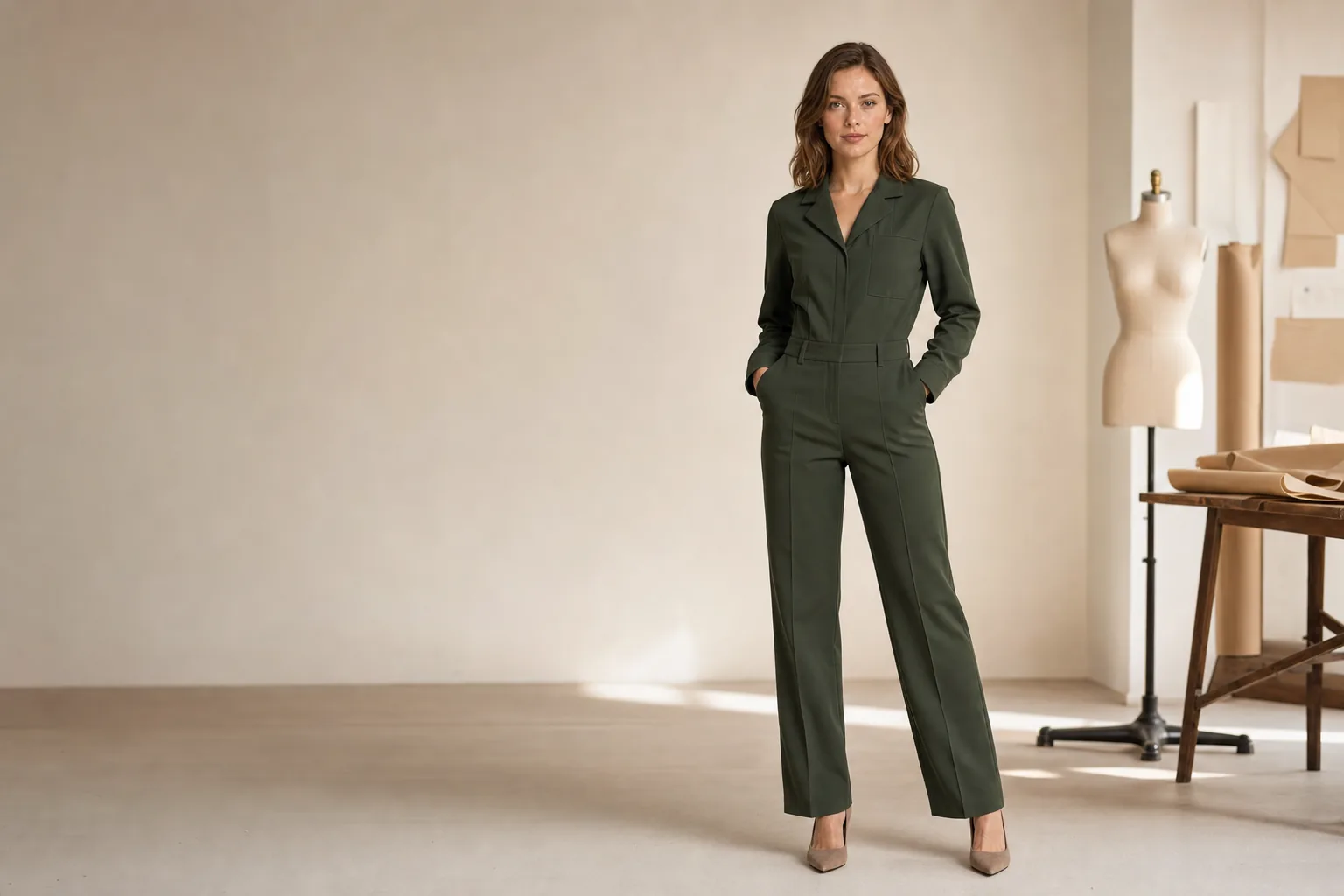
Jumpsuit development scope
Connect bodice and trouser fit without losing movement.
A one-piece garment must accommodate torso length, rise and entry while maintaining the intended waist and leg silhouette. Fit comments should account for how these areas influence one another.
One-piece fit map
Shoulder, bodice, waist, torso, rise, hip and leg measurements.
Entry strategy
Front, back or side openings plus any placket, zipper or wrap treatment.
Movement needs
Sitting, reaching, dressing and intended work or occasion use.
Silhouette & details
Treat the upper body, torso and lower body as one pattern system.
Changes to shoulder, waist or rise can shift the entire garment. The sample should be assessed in standing, seated and movement positions appropriate to the design.
Upper body
- Shirt, wrap and clean bodices
- Collared and collarless necklines
- Sleeveless to long-sleeve options
- Fitted, relaxed or utility shapes
Waist treatment
- Seamed and shaped waists
- Elastic or drawstring sections
- Belts, tabs and tie waists
- Relaxed straight-through bodies
Lower body
- Straight, tapered or wide legs
- Full, ankle or cropped lengths
- Short romper directions
- Pleats, darts and utility panels
Entry & function
- Button and zipper fronts
- Concealed back or side zippers
- Wrap and crossover openings
- Chest, side and patch pockets
Jumpsuit fabric direction
Balance movement, coverage and one-piece weight.
Potential directions include cotton twill, poplin, chambray, linen blends, crepe, drapey viscose and lighter woven suiting.
The chosen article should be reviewed for opacity, drape, recovery, shrinkage, seam strength, pressing behavior and the cumulative weight of the full garment and its hardware.
- Torso comfort and recovery
- Pocket and hardware support
- Opacity through the seat
- Weight across the full garment

Jumpsuit customization
Shape the one-piece around use, entry and proportion.
A design detail should be assessed for its effect on dressing, movement, weight distribution and upper-to-lower balance.
Bodice direction
Adjust neckline, collar, sleeve, chest shaping and front treatment.
Waist definition
Use seams, elastic, drawcords, belts, tabs or an intentionally relaxed line.
Utility function
Specify entry opening, pocket layout, hardware, reinforcement and adjustability.
Collection coding
Coordinate color, labels, trims and packing with related styles in the range.
Jumpsuit-specific quality points
Check full-body balance, entry and movement together.
Inspection points are confirmed against the approved garment and order requirements.
Explore our capabilitiesTorso & rise
Review vertical comfort, waist level, crotch position and movement without pulling.
Upper-lower alignment
Check center lines, side seams, waist seam matching and leg hang.
Opening function
Test dressing access, zipper or button operation, reinforcement and closure security.
Weight & finish
Inspect pocket support, hardware, pressing, hem balance and overall garment presentation.
Broaden the one-piece story
Use adjacent categories to refine fit and layering
Trouser, dress and jacket pages provide useful context for the connected sections of a jumpsuit.
Trousers
Compare rise, leg profile, pockets and lower-body measurements.
Explore TrousersWoven dresses
Review one-piece silhouette, neckline and waist-volume decisions.
Explore Woven dressesBlazers & light jackets
Plan a layer around sleeve volume, body ease and hardware.
Explore Blazers & light jacketsJumpsuit-specific quality points FAQ
Questions tied to this garment category.
Answers stay connected to the actual design, material and confirmed order inputs.
01Why is torso length important on a jumpsuit?
The garment connects shoulder to rise, so insufficient or excessive vertical length can affect waist placement, movement and crotch comfort. Torso-related measurements should be reviewed with the intended ease.
02How is dressing access planned for a one-piece style?
The opening type, length and location should be tested against neckline, waist, hip and shoulder dimensions. Zippers, buttons, wraps or elastic sections need to support practical entry without undermining the design.
03Can the same jumpsuit be developed in full and short lengths?
A romper direction can be related to the full-length style, but leg opening, inseam, rise balance, pocket proportion and overall visual balance should be reviewed for each version.
04What should a jumpsuit fit sample review include?
In addition to measurements and standing appearance, review entry, sitting, walking and reaching as relevant to the design. Record comments by bodice, torso, waist, rise and leg area.
Start with what you have
Send the full jumpsuit reference so torso, rise and entry can be reviewed together.
Share a Tech Pack, reference image, sketch or sample together with target quantity and timing. We will use those inputs to review construction, materials and the next useful step.
Send Your Brief