
Woven womenswear category
Women’s Blazer & Light Jacket Development
Develop structured blazers and lighter woven jackets with pattern balance, lapels or collars, pockets, sleeve setting, internal support, lining and pressing reviewed for the intended level of tailoring.
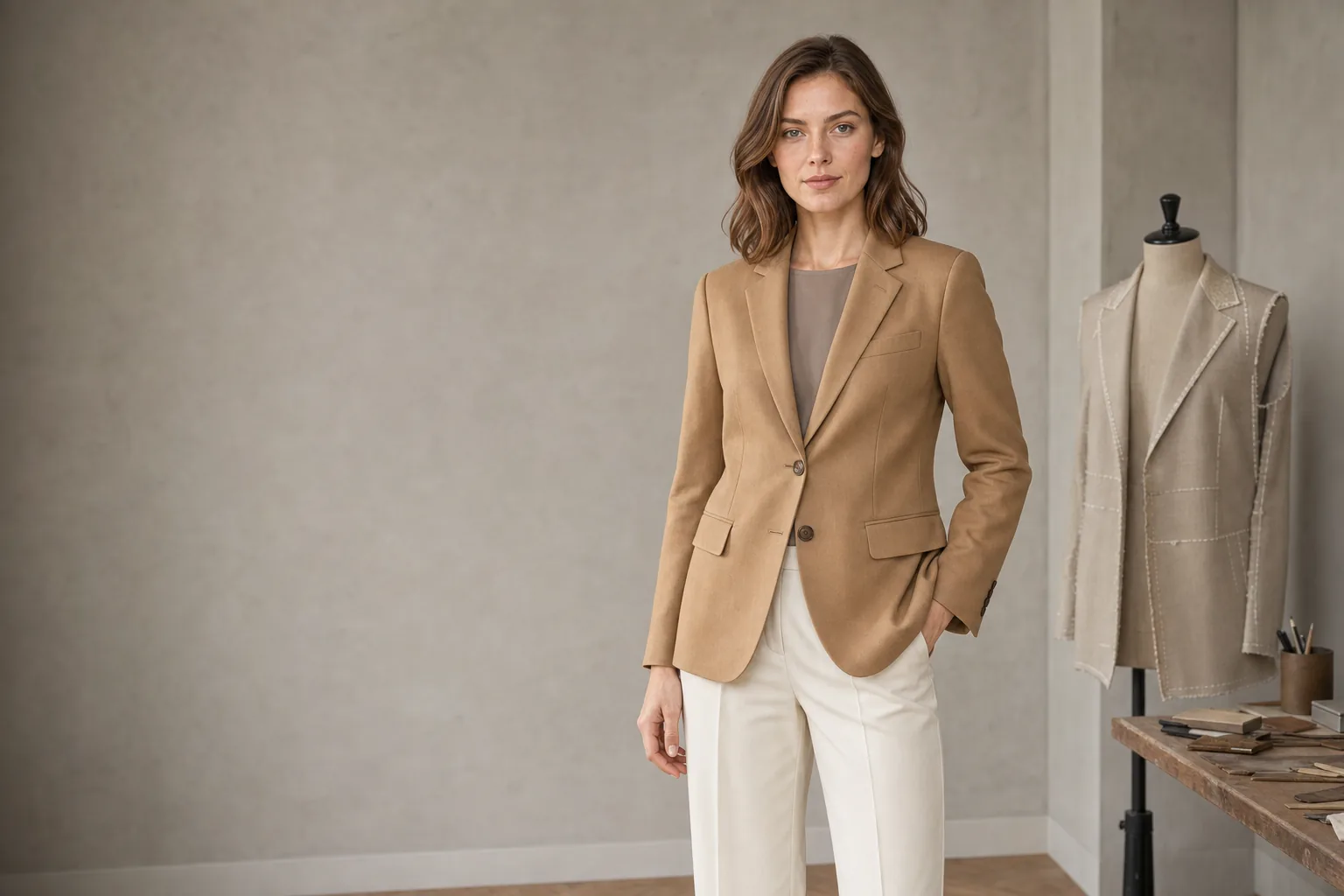
Blazer & jacket development
Define how much structure the outer layer should carry.
A soft unlined jacket and a tailored blazer use different support, pocket, sleeve and pressing systems. The design brief should identify the target shape and internal finish before development choices are made.
Tailoring level
Soft, semi-structured or more defined shape and shoulder treatment.
Interior direction
Unlined, partially lined or fully lined with agreed support components.
Layering context
Underlayer volume, intended ease, length and seasonal use.
Silhouette & details
Build shape through pattern, support and pressing.
Front balance, lapel behavior, sleeve pitch and pocket construction need to be developed together with the chosen fabric and internal components.
Structure
- Soft and relaxed jackets
- Single- or double-breasted blazers
- Cropped and longline proportions
- Shaped or boxy bodies
Front & neckline
- Notch, peak or clean lapel lines
- Shirt, stand or convertible collars
- Button, zipper or open fronts
- Facings and front-edge support
Sleeve & pocket
- Set-in or dropped shoulders
- One- or two-piece sleeve directions
- Patch, welt and flap pockets
- Cuffs, vents and sleeve openings
Interior & hem
- Full, partial or no lining
- Interfacing and localized support
- Back vents and movement pleats
- Faced, bagged or clean hems
Blazer & jacket fabrics
Approve shell, support and lining as one construction package.
Potential directions include woven suiting, twill, linen blends, wool blends, brushed cotton and lighter structured woven articles.
Shell selection should be tested with the intended interfacing, shoulder treatment, tape, lining, pocketing, closures and pressing method. Weight, recovery, shrinkage and surface sensitivity affect the finished shape.
- Interfacing adhesion and hand feel
- Lining ease and compatibility
- Lapel roll and pressing response
- Pocket and closure support
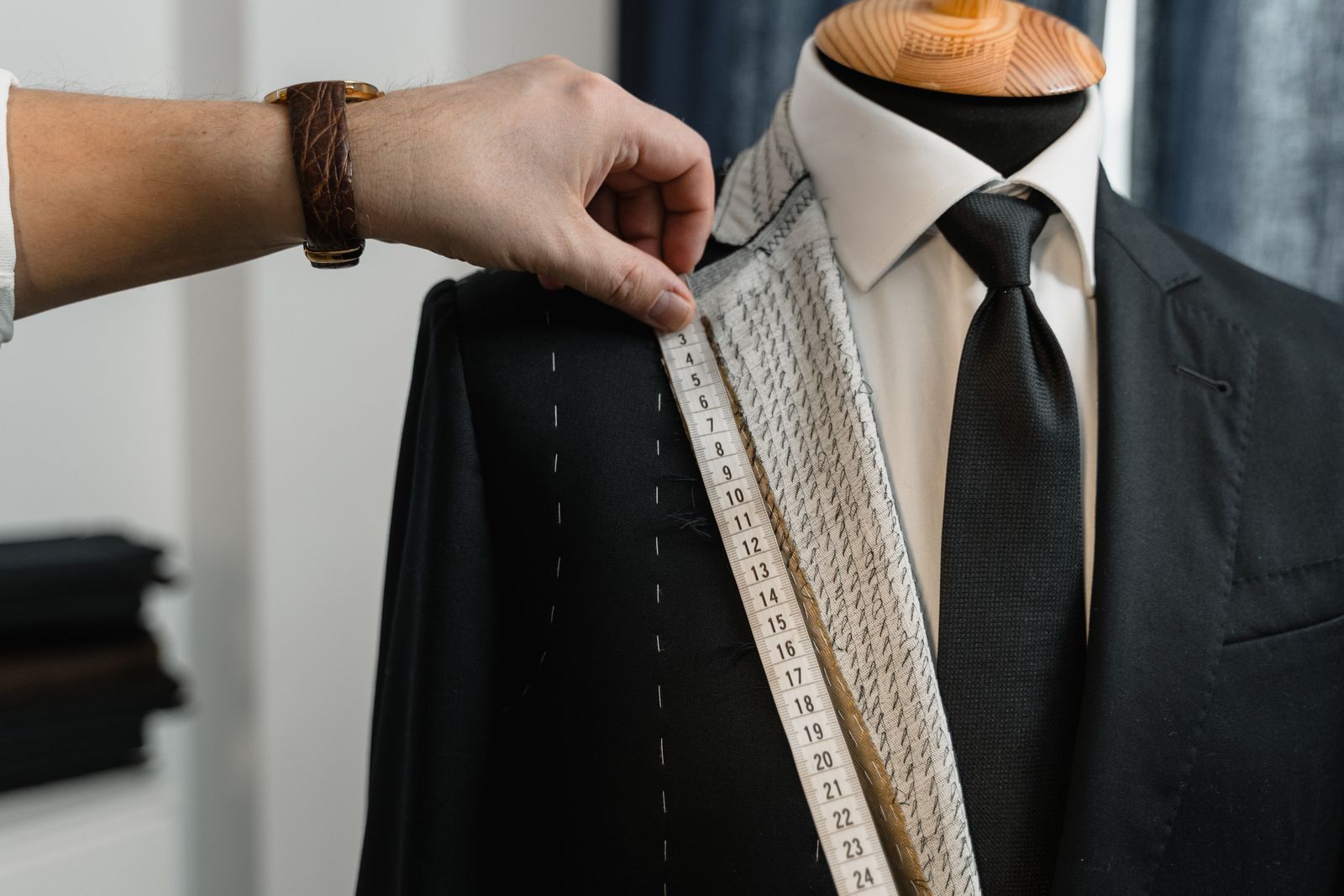
Blazer & jacket customization
Set the tailoring language for the collection.
Outerwear details should be documented on both the exterior and interior so the finished construction matches the approved level of structure.
Proportion
Adjust body length, button stance, shoulder line, waist shape and sleeve length.
Tailoring detail
Define lapel width, collar shape, vents, edge stitching and internal support.
Pocket & hardware
Choose pocket construction, button or zipper finish and reinforcement points.
Interior branding
Specify lining color, internal labels, hanger loops, hangtags and packing method.
Blazer & jacket quality points
Inspect structure before final pressing defines the appearance.
Inspection points are confirmed against the approved garment and order requirements.
Explore our capabilitiesFront balance
Check hem level, closure alignment, lapel roll, collar seating and front-edge shape.
Shoulder & sleeve
Review shoulder line, sleeve pitch, cap shape, mobility and left-to-right symmetry.
Pockets & support
Inspect placement, opening shape, reinforcement, interfacing and surface cleanliness.
Lining & pressing
Check lining ease, hem relationship, vents, seam impressions, shine and final shape.
Build a tailored story
Coordinate the outer layer with dresses, bottoms and sets
Related categories help define layering ease, shared fabrics and the intended collection proportion.
Trousers
Develop coordinated tailoring, waist details and matching suiting directions.
Explore TrousersWoven dresses
Set jacket length and ease around a one-piece silhouette.
Explore Woven dressesMatching sets
Plan two-piece or layered assortments with controlled shade and trims.
Explore Matching setsBlazer & jacket quality points FAQ
Questions tied to this garment category.
Answers stay connected to the actual design, material and confirmed order inputs.
01What distinguishes a soft jacket from a structured blazer?
The distinction can involve pattern shape, shoulder treatment, interfacing, chest and front support, lining, sleeve construction and pressing. The desired appearance and hand feel should be shown in the brief.
02Which internal components need approval?
Depending on the style, review may include interfacing, tapes, shoulder support, sleeve-head support, lining, pocketing, closures and internal labels. The component package should suit the approved shell fabric.
03How is blazer fit reviewed over other garments?
State the intended underlayer and ease, then review shoulder, chest, waist, sleeve and movement with that layering context. A fit sample worn over an unrealistic layer can lead to misleading comments.
04Why is pressing part of blazer quality control?
Pressing helps establish lapel roll, seams, edges, sleeve shape and overall structure. The process must suit the shell and support materials without causing shine, impressions or distortion.
Start with what you have
Share the outerwear reference, intended structure and layering context together.
Share a Tech Pack, reference image, sketch or sample together with target quantity and timing. We will use those inputs to review construction, materials and the next useful step.
Send Your Brief