
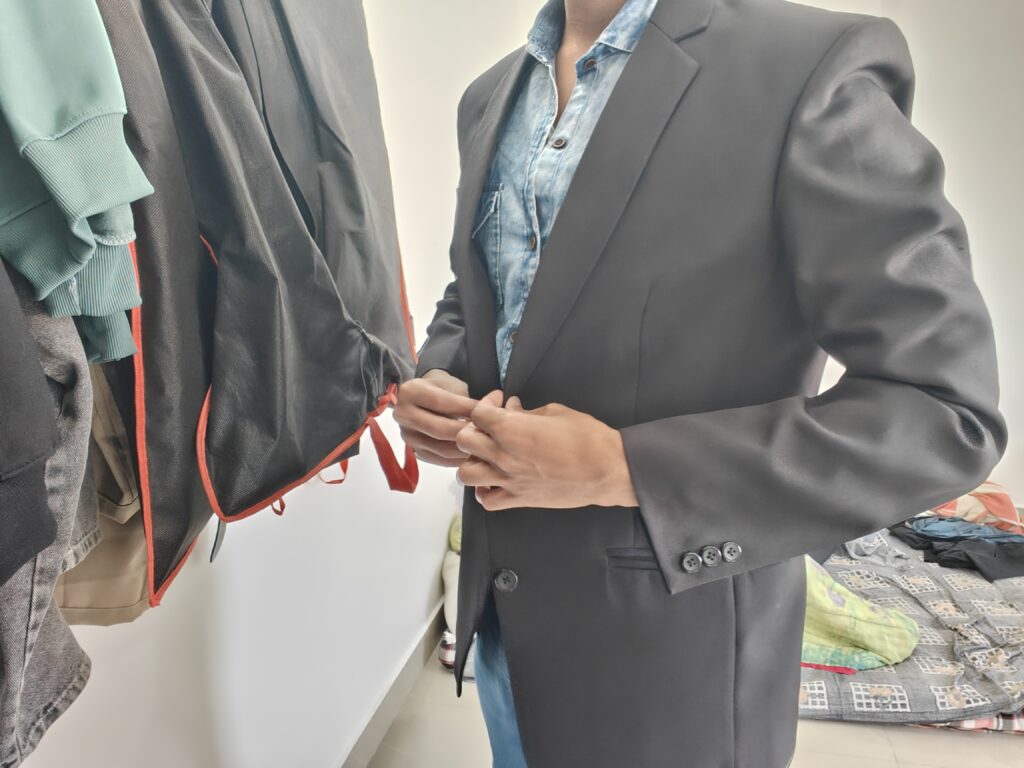
OEM vs ODM vs private label clothing describes three different ways a brand can divide design, development and manufacturing responsibility with a supplier. In apparel, OEM usually means producing the buyer’s defined design, ODM usually includes a supplier-originated or supplier-developed design starting point, and private label means the finished product carries the buyer’s brand. Private label can therefore overlap with either OEM or ODM; it is a branding arrangement, not a complete technical scope.
In an OEM vs ODM comparison, the terms are useful for starting a sourcing conversation, but they are not universal specifications. Two clothing factories can use “ODM” for very different services, and a private-label offer may range from relabeling an existing style to developing a new woven dress. Buyers should compare the actual inputs, approvals, ownership terms, customization limits and production responsibilities behind the label.
Buyer shortcut: ask who creates the design, who controls the specification, what can be customized, what is exclusive, and which approvals are required. Those answers are more useful than the acronym alone.

OEM vs ODM: compare private label at a glance
Think of each model as an allocation of work rather than a quality level. None is automatically better. A mature brand with a tested block and complete Tech Pack may gain control from OEM. A retailer building a fast capsule may value a credible ODM starting point. Either project may include private labels, hangtags and branded packing.
| Question | OEM | ODM | Private label |
|---|---|---|---|
| Starting point | Buyer design and specification | Supplier design, sample, block or concept | Either OEM, ODM or an existing product |
| Main buyer work | Define and approve the product | Select a direction and define customization | Approve brand, label and presentation details |
| Main supplier work | Translate the specification into manufacturable output | Provide and adapt a design starting point, then manufacture | Apply approved identity and packing requirements |
| Key risk to control | Missing or conflicting technical instructions | Unclear customization, availability or exclusivity | Incorrect labels, claims or brand assets |
Separate five scopes before requesting a quote
- Design: silhouette, details, color and intended customer.
- Technical development: pattern, measurements, construction and fit.
- Materials: fabric, lining, trims, labels and packaging.
- Manufacturing: sourcing, sampling, cutting, sewing, finishing and quality control.
- Commercial rights: permitted use, confidentiality, branding and any agreed exclusivity.
For woven womenswear, the same sketch can lead to different results depending on fabric drape, pattern balance, lining, seam construction and pressing. A model name does not resolve those decisions. The buyer and supplier still need an approved specification and physical sample.
Do not treat the acronyms as ownership clauses
Choosing OEM or ODM does not by itself determine ownership of patterns, samples, artwork, improvements or production files. The World Intellectual Property Organization’s fashion and intellectual property overview shows that different rights can apply to designs, brands and creative material. Applicable rights vary by country and facts, so buyers should obtain qualified legal advice for important markets and document the agreed commercial scope.
Use OEM when the brand defines the product
In an OEM clothing project, the brand normally supplies the design direction and enough information for a manufacturer to develop or reproduce the intended garment. Inputs may include a Tech Pack, sketches, reference garment, approved block, measurement chart, bill of materials and label files. The manufacturer reviews feasibility, clarifies open points, makes samples and prepares the style for production after approval.
OEM gives control only when the brief is controlled
A complete brief should distinguish aesthetic intention from measurable requirements. It can state the desired silhouette, but it should also define finished measurements, construction, materials, components, artwork placement, color standards and packing. The Tech Pack checklist for woven womenswear provides a practical starting structure.
If a buyer provides only a reference photo, hidden construction and fit remain unknown. The supplier may need to propose seam methods, pattern dimensions, fabric options and internal components. That is still compatible with an OEM relationship, but the added development work and approvals should be recognized in the scope.
Plan OEM as a sequence of approval gates
- Feasibility and quotation assumptions are reviewed.
- Fabric and trims are confirmed by exact article or approved standard.
- Pattern and first sample establish shape and construction.
- Fit comments are converted into controlled revisions.
- A pre-production sample and final specification set the bulk baseline.
- Labels, packing and quality requirements are released to production.
These gates reduce ambiguity but do not guarantee a particular result or schedule. Complexity, material availability, revision rounds and order scope all affect the path. Review the pattern, sampling and fit process before assigning a launch date, and tell the factory which decisions are fixed versus open for proposal.
Protect confidential information deliberately
Share the files needed for evaluation, mark sensitive material, limit access where practical and define permitted use in appropriate agreements. WIPO’s trade secrets resources emphasize that valuable confidential information generally depends on reasonable steps to keep it secret. An OEM label alone does not create confidentiality, exclusivity or automatic transfer of rights.

Use ODM when a supplier design starting point adds value
ODM can reduce the blank-page work by starting from a supplier’s existing design, sample, block or seasonal direction. The buyer selects a base and agrees what may change—for example fabric, color, length, sleeve, trim, fit, label or packing. The supplier then develops and manufactures the approved version within the defined scope.
Ask what “ODM design” actually includes
Some offers provide a physical showroom sample. Others provide sketches, reusable blocks or concepts that still require material and fit development. Ask whether the displayed sample is production-ready, whether its fabric and trims remain available, which sizes have been tested, and whether the quotation assumes the original construction.
For a woven blouse, changing fluid viscose to crisp cotton poplin may require more than a material substitution. Collar behavior, gathering, sleeve volume, seam appearance and ease can all shift. Use the woven fabrics and trims guide to evaluate whether the selected article still supports the intended design.
Define the customization boundary
List each requested change and classify it as color or trim substitution, pattern adjustment, construction change or new design feature. A longer hem may be straightforward; a different neckline, sleeve or fit can require pattern work and another sample. The larger the change, the less useful it is to assume that the original sample proves the revised garment.
Also ask whether the starting design may be offered to other buyers, whether any territory or period of exclusivity is available, and what happens to brand-specific artwork or new development. Do not infer exclusivity from a custom color or label. Put material terms in writing and seek legal advice where the commercial value warrants it.
Use ODM to focus choices, not skip approvals
A supplier starting point can make selection faster, yet the buyer still needs to approve the final fabric, color, fit, measurements, workmanship, labels and packing. Review the sample in the intended size and material. Confirm that the specification reflects every change from the base design before production.
Plan private labeling and choose the right model
Private label describes the identity presented on the garment and its packaging. It may include a main brand label, size label, care or composition label, hangtag, barcode, sticker, protective bag, folding method and carton assortment. It does not explain who designed the product, so a buyer can request private-label OEM or private-label ODM.
Treat labels as controlled product components
Supply final artwork, dimensions, color references, materials, fold type, attachment method and placement. Confirm who provides legally required information and who approves proofs. For products sold in the United States, the Federal Trade Commission’s Textile Fiber Rule summary explains disclosures that apply to certain textile products, including fiber content, business identity and country of processing or manufacture. Other markets and materials may have different rules; this operational guide is not legal advice.
Coordinate labels with garment construction early. A care label trapped in a closed seam, a thick main label on a sheer neckline or a late barcode change can create avoidable rework. The private-label and packaging overview helps buyers organize garment identity, folding, protective packing and carton requirements as one approval package.
Choose by the evidence you already have
OEM is usually the clearer conversation when you have an original design, fit standard and technical package that you want manufactured. ODM may be more suitable when you want to begin from a credible supplier design and your requested changes fit the offered development scope. If the priority is simply placing your brand on a defined product, ask whether the underlying route is an existing style, ODM adaptation or OEM development.
Before choosing, request concrete evidence: base sample or drawing, available material references, customization list, sample stages, document ownership terms and quotation assumptions. Compare suppliers on how clearly they answer, not on which acronym sounds more complete. Product quality still depends on specifications, materials, workmanship, approvals and production control.
Send a brief that makes the model clear
State the product category, target customer, design source, quantity by style and color, intended fabric, required customization, size range, destination market, target timing and branding needs. Attach any Tech Pack, sketch, reference link or sample information you can share. Identify confidential files and explain whether you expect the supplier to follow, develop or propose the product.
If you are comparing OEM, ODM or private-label routes for woven womenswear, send Enqi Apparel your brief for a manufacturing review. A precise starting scope makes it easier to identify missing inputs, realistic next approvals and the information needed for a useful quotation.