
A clothing Tech Pack for woven womenswear is the controlled product specification that tells a manufacturer what garment to develop, how to measure it, which materials and trims to use, and how to label, finish and pack it. A useful Tech Pack does more than show a design. It separates confirmed requirements from open questions, gives every page a version, and creates a reference for quotation, sampling, approval and bulk production.
The exact document can be a workbook, PDF or product-lifecycle system export. The format matters less than clarity, consistency and revision control. This clothing Tech Pack guide shows buyers what to include, where woven garments need extra detail, and how to keep the file aligned with physical samples as a style moves toward production.
Clothing Tech Pack: define style identity, design intent and construction
Start with an identity block that stays visible across the document: brand, season or collection, style name, style number, category, owner, creation date and current revision. Add the intended market, size range and colorways where relevant. A page that becomes separated from the full file should still be identifiable.
Use technical flats to show the garment, not a pose
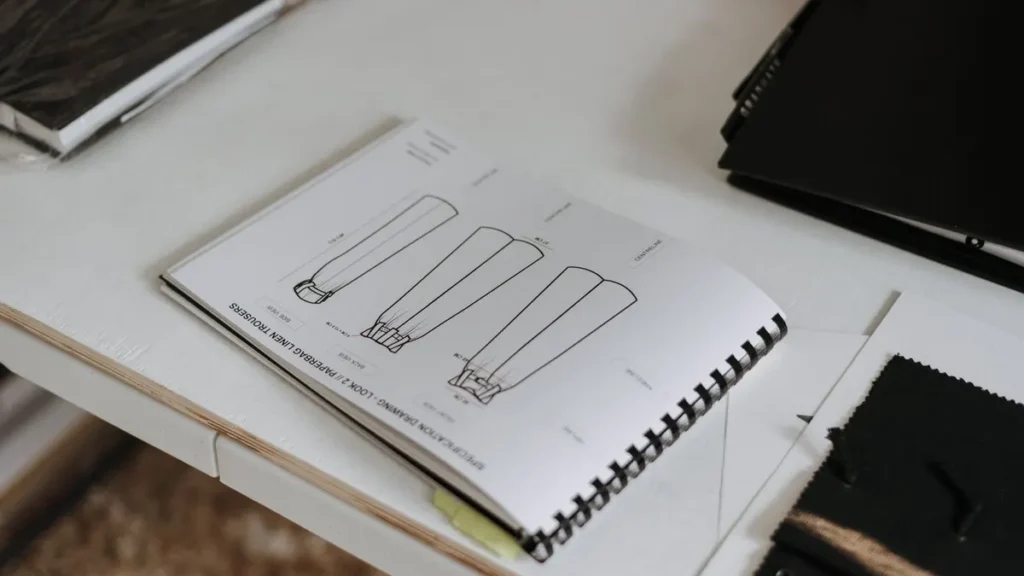
Front and back technical flats should show proportions and construction without the distortion of a fashion illustration or model pose. Add side or interior views where they resolve information that the front and back cannot show. Enlarged callouts are useful for a collar, placket, cuff, pocket, waistband, vent, closure, lining or complex seam intersection.
Label callouts consistently and point them to the exact feature. If a drawing shows decorative topstitching, the specification should explain whether it is functional, its location and the required visual result. If a line is only a styling guide, identify it so the sample room does not interpret it as a seam.
Write construction notes that remove choices
For woven womenswear, describe seam and edge finishes, stitch appearance, seam allowance where it is controlled, reinforcement, closures, lining or partial lining, interfacing, darts, pleats, gathering, hems and pressing requirements. Critical details depend on the style. A sheer blouse may need a defined seam finish; a tailored dress may need support at the neckline or waist; a printed shirt may need an agreed matching position.
Use sketches and words together. “Clean finish” can mean different things to different teams. A section sketch, reference sample or named construction method helps, but only when the buyer and manufacturer interpret it the same way. ASTM D6193 is one industry terminology reference for stitches and seams if the parties choose to cite it. Referencing the document does not mean a product or supplier is certified, and it does not replace an order-specific workmanship standard.
Distinguish source material from approved specifications
A reference photograph, inspiration garment or sketch can begin a discussion, but it is not automatically the final requirement. Note what should be adopted, what should change and what remains to be developed. Buyers should also confirm they have permission to use protected artwork, logos or third-party designs.
If the starting information is incomplete, a product-development review can turn visual direction into construction, material and fit questions. Mark each unresolved item as “TBC,” “supplier proposal requested,” or another controlled status rather than filling the gap with silent assumptions.
| Section | Minimum useful content | Decision supported |
|---|---|---|
| Style identity | Style code, description, season, owner and revision | Teams are discussing the same product and file |
| Technical flats | Front, back and detail views with numbered callouts | Silhouette and visible features are understood |
| Construction | Seams, openings, lining, reinforcement and finishing | Sample method and quotation scope are comparable |
| Measurement spec | POM method, base size, graded values and tolerances | Fit can be reviewed against stated targets |
| BOM | Exact fabric, trim, label and packaging references | Components can be sourced, approved and traced |
| Comments and approvals | Versioned decision log with annotated evidence | Revisions reach the next sample or production file |

Specify measurements, fit, tolerances and grading
A measurement chart becomes useful only when another person can repeat the measurement. Give each point of measure, or POM, a unique code and written method. State whether the garment is laid flat, fastened, relaxed, stretched or measured along a curve. Diagrams should show start and end points for any method that could be interpreted differently.
Connect the base size to the intended fit
Identify the sample or base size and the body-size or fit reference behind it. Garment measurements include design ease, so they should not be copied directly from body measurements. State the intended silhouette—close, regular, relaxed or oversized—but support that language with measurable values at the relevant bust, waist, hip, bicep, rise or length positions.
For dresses and jumpsuits, vertical balance and the relationship between bodice, waist, hip and rise may be as important as circumference. For shirts, shoulder, cross-back, armhole, sleeve pitch and collar measurements can affect movement and appearance. For trousers, rise shape, crotch extension, thigh, knee, hem and inseam interact. Choose POMs that control the actual style rather than reusing an oversized generic list.
ISO 8559-1 provides definitions and procedures related to body measurement for clothing design where relevant. It is a reference, not a ready-made garment specification, and using it does not establish certification. Buyers still need their own target body data, fit model or block and garment-ease decisions.
Set tolerances by risk, not convenience
A tolerance is the permitted variation from the target garment measurement; it is not an instruction to deliberately make garments anywhere within a wide range. Critical fit, symmetry or functional measurements may need different tolerances from low-risk dimensions. Consider the material, construction, measuring repeatability and finishing process before setting them.
Specify whether tolerance applies to an individual measurement, a left-to-right difference or both. If a washed or pressed state matters, say when the measurement is taken. The buyer and supplier should also agree how out-of-tolerance findings are handled during sampling and bulk inspection.
Make grading visible and reviewable
List the measurement values for every ordered size or provide explicit grade rules tied to the base size. Do not assume all dimensions increase by the same amount. Neck drops, pocket position, dart length, strap length and garment length may follow different logic, and some details may stay constant.
A size-set review can reveal proportion issues that a single base-size sample hides. The purpose and scope should be stated: which sizes will be sampled, whether final material is required, and which measurements or visual relationships must be approved. Keep the approved values in the current Tech Pack, not only in email comments.
The pattern, sampling and fit workflow should link sample measurements, fit observations and pattern revisions to the same version. A garment can meet the chart and still fit poorly if balance or shape is wrong, so combine measurements with an informed fit review.

Build a traceable BOM for materials, trims, labels and packing
The bill of materials, or BOM, identifies every component required to make and present the garment. Give each item a line number, component name, location, supplier reference where known, composition or material, color, dimensions, finish, quantity per garment and approval status. Attach swatches or approved references in a way that preserves their identity.
Describe fabric beyond the fiber name
“100% cotton” can describe many different woven fabrics. Add the weave or article direction, weight or other agreed physical descriptor, usable width, finish, color reference and intended performance. Record requirements for opacity, drape, hand feel, stretch, shrinkage, colorfastness, surface appearance or print when those characteristics affect the style or destination market.
For stripes, checks, engineered prints or directional motifs, include layout and matching expectations. For garment washing or other wet processing, identify the approved hand feel and appearance as well as dimensional targets. A dedicated fabric and trim confirmation helps ensure the sample swatch, BOM and bulk purchase reference describe the same article.
Specify every trim by function and placement
Buttons, snaps, hooks, zippers, elastic, drawcords, thread, binding, lace, interlining and lining all need enough information to source and approve the right component. Include size, material, color, finish, puller or button shape, branding, placement and performance requirements where relevant. A small substitution can change appearance, care behavior or production method.
If the manufacturer is asked to propose an alternative, state the criteria it must meet and require approval before bulk purchase. Keep the original and replacement references distinct in the revision record. Do not leave obsolete component codes in another page of the file.
Include labels, packaging and market information early
Main labels, size labels, care labels, origin labels, hangtags, stickers, bags or alternative protective packaging, tissue, folding and carton instructions belong in the Tech Pack or its controlled packing appendix. Add artwork files, dimensions, material, colors, placement and attachment method. Include the destination market so the responsible parties can identify applicable labeling, safety and testing obligations.
In the United States, the FTC’s Care Labeling Rule guidance explains care-instruction responsibilities for covered textile apparel. Other rules and markets may apply to fiber content, origin, children’s products or other claims. The buyer should obtain appropriate compliance advice and approve final artwork; a Tech Pack template alone cannot establish legal compliance.
The private-label and packaging specification should be reviewed before bulk components are ordered. This reduces the risk of a finished garment waiting for an unapproved label or a carton plan that does not match warehouse needs.

Use the Tech Pack as a version-controlled approval system
A Tech Pack is not finished when the first file is sent. It develops with quotations, material proposals, samples, fit comments and approvals. The challenge is to change it without losing the decision history or allowing old instructions back into the current order.
Run a preflight before requesting a quote or sample
Check that the style identity matches on every page, units of measure are stated, callout numbers exist in the notes, color names match the BOM, measurement formulas do not contain errors, artwork links work, and every attachment is included. Mark unknowns visibly. If quantity, size breakdown, destination, timing or packing affects the request, include the known commercial context.
A manufacturer may still need to ask questions. That is useful: it exposes decisions that the file does not yet control. Record the answer in the next Tech Pack revision instead of leaving it only in chat. For an overview of what follows after approval, see the woven womenswear bulk-production process.
Consolidate sample comments into one decision record
Identify the sample type, sample version, date received and the Tech Pack version used to make it. Organize comments under fit, measurements, construction, materials, color and appearance. Use annotated photographs when they show the issue clearly, but accompany them with an actionable instruction and update the relevant specification page.
Separate observations from approvals. “Sleeve feels tight” is an observation; “increase bicep by the approved amount and revise the pattern” is an instruction only after the team has decided the correction. Confirm whether a resample, counter sample, digital evidence or updated measurement report is required to close each point.
Publish one current version and archive the rest
Use a simple version convention, revision date and change log. Name the responsible approver and define what approval covers. When a new revision is released, archive the old file as superseded and provide the current complete package rather than a collection of replacement pages with uncertain priority.
Before authorizing bulk, reconcile the Tech Pack with the approved physical sample, final material and trim references, purchase order, size breakdown, color breakdown and packing specification. If two sources conflict, document which one governs and update the others. Production should not begin on an informal assumption about precedence.
Final Tech Pack checklist for woven womenswear
- Style code, description, owner, market, size range, colorways and current revision are consistent.
- Front, back, interior and detail drawings show all construction that affects sampling or cost.
- Construction notes cover seams, edges, closures, lining, reinforcement, pressing and specialist operations.
- Every POM has a code, repeatable method, target by size and considered tolerance.
- The BOM identifies the exact fabric, trims, thread, labels and packaging with approval status.
- Prints, artwork, colors, label copy, placement and intellectual-property permissions are controlled.
- Sample comments and approvals are tied to the correct physical and digital versions.
- Open questions, quotation assumptions and buyer decisions are visible rather than implied.
A strong clothing Tech Pack reduces avoidable interpretation, but it does not replace collaboration or a physical approval process. Its value comes from making decisions visible, testable and transferable from buyer to merchandiser, pattern room, sample room and production team.